Please excuse me writing. I just find it so much easier to write than to speak on camera. Here’s two distinct cultural techniques, speaking and writing. Maybe they’re on equal footing. Nowadays people like to share recorded speeches as much as they used to like sharing books and newspaper articles.

I’m not saying that my musings are important enough for the world, or inspiring enough so that people would risk sharing them to their trusted ones. But what I do write does seem important enough for me to write down, and going through the trouble of publishing it online, even though risking wasting your time. But all in good faith.
So, here’s my thoughts:
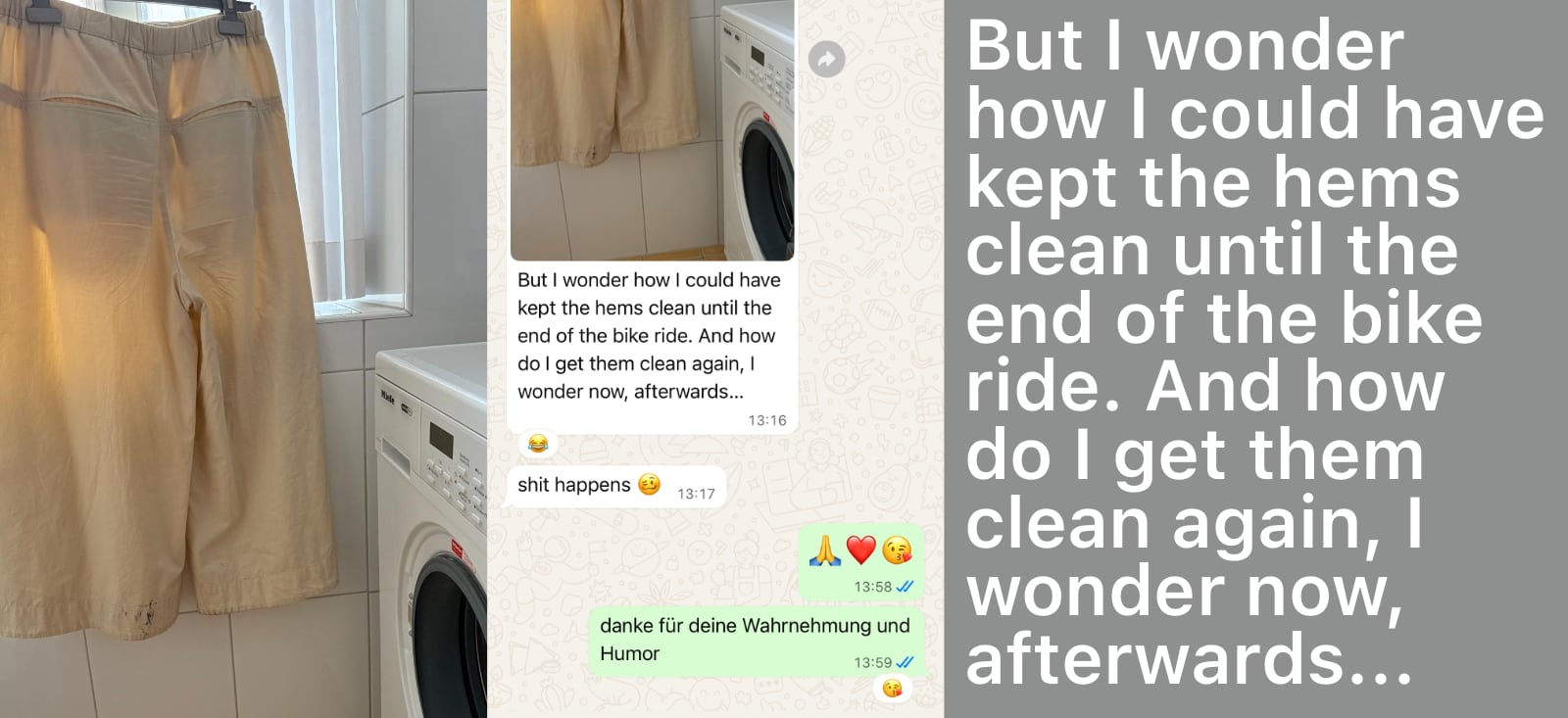
I was sitting and thinking. Sitting in the corner of the coffee shop, thinking. Watching the people, glancing over them. This guy leans on a cane. Odd enough. A Westerner, of course. I’ve never seen a Vietnamese leaning on a cane. One guy is wearing a blue badge around his neck. Another woman with the same badge. Two people with face masks. One lady dressed all in dark wine red, with the exact same color handbag, and palazzo pants. A beautiful old cougar, very tasteful. But I wonder how she keeps those extravagant hems clean until the end of the day. Did my mom scold me too much? I see a woman in a white pant suit with maroon high heels, the blue badge around her neck, pushing a rolling suitcase with her left hand, and carrying a large wallet and a Grande Iced Latte in her right.
I suddenly jumped up to help her go through the door, which is a large and heavy swing door. She smiles, says, “Thank you,” a beautiful voice, a beautiful smile, a most beautiful woman.
Then I sit again, thinking: somehow, on a biological, biomechanical level, my body needs to accommodate the requirements for such a brief, strong action. Breathing is largely unaffected, but the heart rate is up, blood pumping strongly through the valves. Now settling back into sitting and thinking. “I should probably do more cardio,” I report to myself.
Sonja, a new neighbour, I guess around 45 years old, a beautiful gal from Canada, she’d lived in Hong Kong for 25 years, and in London for four, now she’s in Vietnam, waiting for some project in Portugal to kick off. Recently she took in a street dog, named him Oreo, because he’s black and white. I haven’t seen her for a few weeks. Now she’s back, bandages around her head.
I say “Hi”, she’s radiant. I say, “What happened?”, she says, “surgery.” She points to some invisible stitches below her hairline. I joke, “Did they take off the top plate?” Smiles, laughter, small-talk. I forgive Oreo for barking at me.
The next day, on my way into the coffee shop I pass by her table again. Susan, the 60-year-old teacher from Canada is there, too. Susan says, “I’ve been in Vietnam for 9 years already.” Sonja comes out to tell us about her surgery. It was a decade in the planning, that’s how long she had known the cosmetic surgeon already. Would have cost 250,000 USD in the US, 100,000 in the UK. Much more affordable in Bangkok, she says. The process was much more intense than anticipated. “It was incredibly hard on my body,” Sonja admits readily. The incision traced around her face, 6 hours of anesthesia, she shows us the almost invisible cut running by her ears. Everything went great. She does indeed look more radiant. And very happy.
I was sitting and thinking. Why don’t these people ever talk to me. I notice the lack of a question mark. Maybe I don’t advertise myself enough. Well, I think, there’s too much competition. And these professionals are all dead serious. Highly respected and highly competitive. Big money. The sword is mightier than the feather. Closed lips can sink one’s own ships.
It took me a decade to learn a very special massage technique from a Philippine healer, a great master. I think this massage technique could have produced better results than the surgery, and better in the long run anyways. But I would have had to do the work. And Sonja would have missed out on the experience of surgery in Bangkok. And I would have had to put the massage technique to the test, try and fail, most likely. And who has the patience anyways? One or two massages, probably for free, can’t compete with six hours of surgery for 50k USD in Bangkok. The two stories just aren’t on the same level.
I need to work on myself more. I’m such a slacker in this regard. Blessed with such insight and talent, and barely even applying it to myself. I should be ashamed of myself. I am Ignatius J. Reilly, the main character of John Kennedy Toole’s book A Confederacy of Dunces. I am worse than him. I’m certainly worse than him, minus the expressive ability.
There’s something to be said about beating oneself up. I laugh. I’m sitting and thinking, writing and giggling. I amuse myself. I’m easily amused by myself. I am Holden Caulfield, the main character of J. D. Salinger’s book The Catcher in the Rye. I am worse than him, I lack his negativity, I lack his lack of perspective. I can’t even swear that well.
A toddler walks by. Stops in front of me. Stares at me. I smile and say, “Oh hi!” The toddler looks at me with big eyes, probably expecting some more interaction. I continue to smile and say, “Oh wow! So good walking and standing, look at you!” Her dad catches her and brings her back to their table. The toddler walks back to me. She stands in front of me again. This time she lifts her right arm forward, with an elegant little rotation and then freezes in that position and stares at me. I smile and say, “Oh wow! Look at you! You’re able to lift your arm without falling over forwards!” Her dad catches her and brings her back to their table. Two minutes later the toddler walks back to me.
I’m getting up to order an Oatmilk Caramel Macchiato. Or another plain Americano. And I hope that I’ll be able to do something good for you, too. Take good care of yourself, and see you in the next video!