Frogs jump

„Frogs jump, caterpillars hump, worms wiggle, bugs jiggle” – excerpt from »Jump or Jiggle« by Evelyn Beyer

But do they? Do frogs jump? Whenever I encounter one of them they usually sit still and play dead. Why are you doing this, frog? Are you really that afraid of me? And sometimes, during hot summer nights, I would hear them make a loud, continuous noise. Much like cicadas make a loud, continuous noise during hot summer days. And I would have been interested to hear that cicadas are used as symbols of carefree living and immortality. And that they have been featured in many books, and in many pictures in ancient China. What is China? What does ancient mean? I would have liked to see those books and pictures. Many years later I would hear cicadas for myself at the Cote d’azur in South of France, to me they would become a symbol of hot summer days and a lavish lifestyle, with me lying on the soft, dry, sandy ground in the shades of large trees, or sitting with friends and family in front of romantic cottages.

I was a serious child. Maybe I was too serious. But I just couldn’t relate to my teachers. Not to their teachings, not to their books, and not to their ways of interacting with other people. My primary school teacher pulled a manic smile, like a crazy person, and then pumped forwards with her unrelatable teachings, her shrill voice, forcing me to ignore all of my questions, thoughts, and feelings. Why and when do frogs jump? I’ve never seen a frog jump before. I’ve once seen a big one sitting in the middle of a road, after the rain. But my mom said that’s not a frog, „That’s a toad.” I sat in class on my little chair in silence, hands on the table, without moving, as it was expected from all school children. I couldn’t feel anything, I didn’t know what any of that meant. My father brought me to this building every morning, where I would sit in silence on a chair, next to other children who did the same, while a strange woman would talk things in a loud voice. The other children would write something, and the teacher would order me to write something too – so I looked at my neighbour’s notebook and copied the letters and words he drew in there. Sometimes he would make an angry face and didn’t let me look into his notebook, therefore I had nothing to write and then the teacher would tell me to hurry up or come over and point into my notebook and tell me to write the same thing again, the thing which I have just written already. Sometimes the teacher would write something on the blackboard, so I copied that into my notebook. And at some point, every day, all children would get up and leave and I would be in front of the building, and everyone would be gone, and then I would walk back home again, just as my mom taught me to.

Come spring I found a little pond with tiny little frogs all over it. When I came closer they dived off, disappeared under the leaves and into the water. I saw some of them leap away in hurry. Frogs were a lot smaller than toads. And a lot prettier. Their skin was smooth, and their colours were bright. They were so cute! Some of them did jump indeed. Their tiny little legs did something and they looked like pebbles flying, diving, swimming, disappearing. The teacher didn’t lie.

Now, „Would you please come to sit down on the floor”, preferably on a hard wood floor, or on a big carpet. „And sit with your legs long, the knees extended. ” I would say. „How far can you spread your legs apart comfortably, without strain?”, I would ask. I would look at you to see if you’re comfortable. And whether or not you’re flexible enough to sit with an erect spine, or if you would sit with your pelvis rolled back onto your anus and your front side collapsed.

„Then please lean on your left hand, with your left arm extended”, I would say, and I would watch you attentively. I would be in neutral gear, alert, speak with a calm, slightly cheerful voice. I would give you enough time to respond, to turn my spoken instructions into a reality. I would see if you know how to lean on your left hand with a straight arm, if you know how to to shift weight onto your hand in this position. I would see how far you have placed your left hand away from your pelvis, in which direction you have turned your fingers, your arm, your shoulders, and how the rest of your body would hold and organise in response. By this time I would already know a lot about you, you as a person, just by looking at you, and how you’re doing and not doing things. I would look at you to see if you have any questions so far. I would look at you to see how you’re doing.

And I would stop you if you would be doing something you’re uncomfortable with, or something you could not relate to. If necessary I would explain: „Some folks can sit like this easily, and some can’t. Nowadays it’s not necessary to be able to sit on the floor like this, because we are using chairs instead. But I think it would be nice to be able to sit like this. To have the option.  Is there any situation you could think of when sitting on the floor like this could be useful?”, I would ask. And maybe you would crack a joke about that you haven’t sat down on the floor since over a decade, and maybe I would sit down on the floor to join you, do the same thing. Maybe you would need that from me, and maybe, on some days, I would need that too.

„Then lift your right arm up, your right hand up as high as your right shoulder. Extend your right arm forwards”, that’s the starting position. „And then move your right hand to the left, as if you would point at something with your right index finger, and follow it over to the left.” Repeat this movement a couple of times. „Return to the starting position, and move your right hand, with your right arm straight, over to the left”.

When you observe yourself doing so you will notice that your head can turn, will turn, to the left as well. That the intention of point-and-follow and the physical movements are in agreement, congruent. And that you can do the same physical movements even without pointing and following. That you can shift your awareness entirely to your internal processes, as a choice. And that your right buttock, your right sit bone, will come off the floor a bit, and you will lean more onto your left buttock. A funny kind of feeling, to roll over your left buttock. And maybe deep inside, you might feel your skeleton, your left ischial tuberosity, your left sit-bone, the shape of it. And you will start to notice many more things. You will notice things about your structure, how everything moves and moves in relation, your habits, your way of doing things, yourself. Within a few moments you will have had a successful somatic movement learning experience. You will feel great. You will feel at ease. Attentive. You will want to go on, try more. And I will be happy to be there with you.

Writing exercises, movement exercises

After yesterday‘s post I didn’t feel like writing today. Give it a day’s rest maybe. I wonder if the earth ever slows down? Or if the sun ever takes a rest? Maybe they do, they probably have their own rhythms too. Or humans are different than suns and planets, could as well be true.

Yesterday before bedtime I read a story by Raymond Carver, „What’s in Alaska?” 25 minutes of he said she said, a story that could have happened to people I know, a story that could have happened to me, too. Very particular and very universal at the same time. His writing keeps making big impressions on me.

„Carl got off work at three. He left the station and drove to a shoe store near his apartment. He put his foot up on the stool and let the clerk unlace his work boot.
»Something comfortable,« Carl said. »For casual wear.«
»I have something,« the clerk said.
The clerk brought out three pairs of shoes and Carl said he would take the soft beige-colored shoes that made his feet feel free and springy. He paid the clerk and put the box with his boots under his arm. He looked down at his new shoes as he walked. Driving home, he felt that his foot moved freely from pedal to pedal.” – excerpt from What’s in Alaska, by Raymond Carver

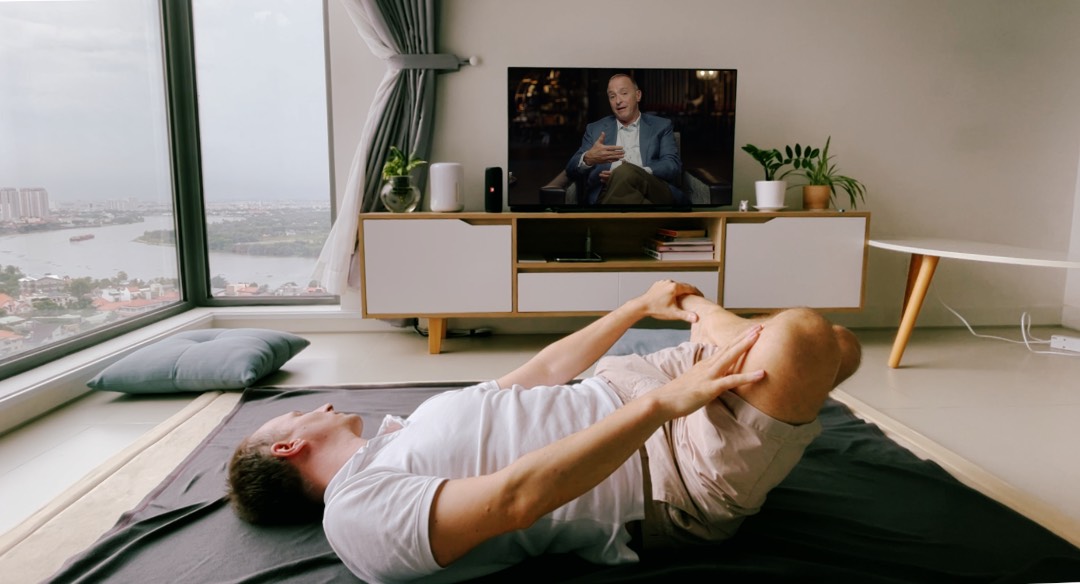
When reading ebooks at home I often put them onto my flatscreen TV in my living room. I walked up and down. Looked at the first sentence from different angles:

  • At three Carl got off work.

Which would make the time, three o’clock, more important than Carl, the character. What will the story be about? The shoe store? About work in general? Or will the story be about Carl? Or will Carl guide me – the reader – into the story, and then pass me on like a baton in a relay race?

  • After having gotten off from work Carl drove to a shoe store near his apartment. It was three o’clock when he left the station.
  • It was three o’clock when Carl got off from work and left the station, he drove to a shoe store near his apartment.
  • Off from work at three. Works at a station. The name is Carl. He has a car and drives himself. Next scene is at a shoe store near his apartment.

That’s how far I got. Then I read the story. Raymond Carver leaves it up to me if or how much I want to feel, and what. And what I want to make of it. I find it sad that he passed so young, at 50. I wonder how he would have developed his work later in life. „Carver, a heavy cigarette smoker, died at his home of lung cancer”, said the LA Times. „Genetics loads the gun, lifestyle pulls the trigger”, said Caldwell Esselstyn, Jr., MD. His life ended as suddenly as some of his stories. But there we have it, maybe it was the whole story.

James Joyce said in a conversation with the art critic Arthur Power, „I always write about Dublin, because if I can get to the heart of Dublin I can get to the heart of all the cities of the world. In the particular is contained the universal.” „When you tell things exactly as they happened, others can understand what you are getting at because they can relate to it with their own experiences”, somebody said somewhere.

Here’s two ideas I had in terms of writing exercises:

  • Turn a David Sedaris story into a Raymond Carver story
  • Make a Raymond Carver story funny

I can see how I will never try this. I wondered: can movement instructions, similar to stories, be written in various styles? Can they be particular and universal? Can written-out movement sequences be interesting not just for the movements et. al. but also for the way they are written? Guiding a real person through a movement sequence, alert, observant, reacting to difficulties or mastery, I find it exciting. It makes me feel alive. I gain from it greatly. But writing out movement sequences, stripped bare of the dialogic process? How can this be interesting? Would you please come to sit. Put one leg in front of you, one in the back. Lean on one hand. Which hand is it? What’s in Alaska?

Integration

One fine day, after all was tried, said, and done, I took my mother’s bicycle out west. I was already 38 years old. I pedalled through the city park alongside the lake, passed the prestigious yacht clubs, the campgrounds, cranked the old wheels over dirt-roads, bridges, through small villages. I kept going. I never rode out west that far before. I went hard for almost two hours. Then I stopped.

There came a deep breath. I breathed in, I kept it for a few moments, then the air passed out again. My body disappeared from my senses, dissolved, for the overwhelming beauty of the land; I could feel my heart, my breathing, how I balanced my head over my shoulders over my pelvis over my feet. It was summer, early afternoon. The air was rich, warm, a friendly kind of hot. Here the land was flat. The high mountains, the foot of the alps in the far distance, tiny and cute with their little snow caps – as if somebody put them there to complete a romantic landscape. The bicycle path put the corn and sunflower fields in my back, the marshland to my front filled the view to the left and to the right. A bird reserve and sanctuary. Green and brown and golden coloured reed beds stretching out under a blue sky. A few full grown meadow trees here and there. The lake glittered in the distance, the sun danced in it. I could smell the lake. Clean, pure lake water, the pride of the local people, drinking-water quality, life. The reed grass, the sun, the water. Calm wind brushing over the land. Over my face, over my clothes. The sounds of summer. The feeling of summer. Suddenly.

Suddenly I smiled. I smiled. I felt my ears pulling back. My lips parted and stretched my face wide. I was the one who was smiling, and I was the observer who felt myself smiling. I felt my upper lip move up over my teeth, up to the top of my gum line. It surprised me. It did not shock me, it surprised me. This is me? I can smile like this? I didn’t know that my upper lip could move up that far in a smile. I smiled a little bit more. I turned my head around, to the left, to the right, yes this was me. I smiled. I allowed the smile to get hold of my whole self.

It was not my first time to be by myself, on my own in nature. I’ve seen beauty before. I did go into nature before. I came to a lake side often, any lake. Or to a river, any river. Or to an ocean. Any ocean. To be in the day, the night, under the stars. The land, unaltered, preserved land. The water. The wind. The animals. When others were busy building their careers and families I was standing in forests. I had my moments with the fox, and with the rabbit. I stood in creeks. In the emerald streams up in the mountains of Taroko National Park in Taiwan. I jumped into the ice cold spring water in the forests of Alberta, Canada. I stood in front of streams as wide as lakes. I felt the earth under my bare feet. I felt the trees. The air. The water. The land. But there was always seriousness in my heart. In my face. In my feet. Hopes and dreams, expectations to live up to, failures to digest, things I needed to know, things I needed to figure out, things nobody talked about, things that were obviously right in front of me but I couldn’t grasp just yet. I knew about longings, desires, disappointments, assertions, lies, promises. „Not everyone gets to be an astronaut when they grow up”, someone wrote jokingly years before. I laughed back then, I thought that poster was brilliant.

But that fine day, when I stood before the overwhelming beauty of the land, suddenly, this seriousness was not in my heart anymore. There was no here-or-there anymore. No in-or-out, alone-or-in-company, faith-or-science, true-or-false. The sickness was gone. Just as sudden as electrical light shies away the terrors of the night. I never saw the darkness as darkness, but the darkness let go of me. And I never saw the light as light, but the light embraced me. The light was probably always there for me, all around me, waiting for me. Even though I worked on it relentlessly, I don’t know why it took me such a long time to get there. All I know is that it did indeed take me a very long time. From thereon after life was never as hard again as it was before.

Overwhelmed

„Forget a book !!! We need an online course !!!” – Benny Drees, in a comment on one of my Youtube videos

I was looking at the talented Dave2D on Youtube and wondered how he does it. How many people does he subcontract? How big is his team? I’m certain he’s not editing himself, what is his workflow? How does he record his voice in such a small, concrete-walled room without any reverb at all? How does he study the facts he’s talking about? Is he even involved in creating each video’s outline? Is everything prepared for him beforehand – the bullet points, graphs, animations, the devices he’s presenting in his show (with or without table), everything – and does he thus work like a news anchor does? Just without teleprompter and instead with freedom of speech? Or does he prepare everything by himself? What would interest me most is this: when in his life and how did he learn to speak in such a smooth, flawless, uninterrupted flow?

I will continue with daily writing for a little while longer. Then stop in mid June, or end of June, somewhen around that time. Daily writing is something I feel confident about. It’s very time consuming and demanding, but I don’t feel stuck or overly overwhelmed. That’s why I had the idea today that – after daily writing – I might try daily videos for a while.

End of June, that’s pretty soon. Scary. That’s why I feel it’s time to focus more on writing out actual movement sequences. I don’t have a team, I don’t have script writers. I will probably have to be my own script writer. But I doubt that I will have enough time to write and film at the same time. I spend 3 to 6 hours a day on my blog posts alone. I’m not a fast writer at all. The whole idea of daily video making worries me down to the bone. I would not even have the money to employ a ghostwriter short-term. What good would such a ghostwriter be?

My scripts would need to have defined, concrete learning goals, formulated via its vehicle: movements. That’s the thing: the movements are like words. The movements are the vehicle for meaning. Any spoken word in a meaningful conversation is spoken for a reason. Any written word in an essay is written for a reason. And similarly, every movement in my movement sequences is there for a reason. Every movement carries meaning, is there for you to discover something very specific. And at the same time is also open for the unspecific.

I don’t know where to start. Take „Shoulder Circles – where to go from here”, for example, this is my draft:

Shoulder Circles, Lines: forwards-backwards, upwards-downwards, Arm Positions: hand standing in front of the chest, arms extended forwards and on top of each other, arm extended resting on the side, arm hanging down behind, arm long over the top,  Leading with: shoulder, elbow, hand, Hip Circles, Lines, Leg Positions: folded on top of each other, lower leg bent – upper leg long, Leading: hip joint, knee, foot of long leg, clarify: Movements of the pelvis: turning in sagittal, transversal, frontal planes, auxiliary lessons, Combination of Shoulder and Hip Circles: rolling, twist initiated from shoulders, twist initiated from the hips, Constraint with both knees on the floor, hands interlaced (arms extended)

That’s material for probably two weeks of daily videos right there, each 10-15 minutes long. Maybe even three weeks. Or, maybe I should forget about a script, instead teach to a student directly. Improvise it, film it. And pull a transcript from the video afterwards, instead of creating a script beforehand. Would that work? Is this something I would like to do? Or should I be the only one on camera? Or should there be a pretty model, an actress, like in the Youtube project „Yoga With Adriene”? Or maybe I could teach to a person, but not film that person, and then play the recording to myself, and film myself moving to the lesson, like I did in my „Good Night Shoulder Circles” video. Would I need to rent a studio? Would I need more equipment? Would I need a team? Would I need more funding and all the extra problems that would come with that?

I don’t know about all that. I’m happy where I am now, where we are now. I’m happy with the slow and steady progress. The small but constant, organic growth. The flow feels gentle, benevolent, not overwhelming. I need time for my work with clients in person, I need time for my writing and filming. I need time for my own learning and studying. And I need time to just be myself. Nowadays we are required to be many things. But not everyone can be everything. Maybe I can be the content manager, and the script writer, and the camera man, and the gaffer, and the sound engineer, and the teacher, and the personal assistant, and the editor, and the channel manager, maybe I can also be the project manager… but I cannot be the business person. I cannot make big decisions, big changes in direction all at once. There’s still some weeks of writing ahead. Sweet writing. And maybe I won’t replace daily writing with daily filming, but just stop daily writing. For a while. We will figure something out. We will take it step by step.

CHANGE_ON_INSTALL

„Sometimes nerves get stuck to the walls of their tubes, like microscopic velcro. You don’t want this happening to your nerves any more than your cat wants tape on its paws.” – from Quite a Stretch, by Paul Ingraham

You might have noticed that I don’t talk much about functional anatomy, biomechanics, and sports science. This is a blog about movement learning, and yet, where is the talk about strength, about flexibility, and about safe ways to achieve more of these two?

Also, consider this: in the 17th century René Descartes, the French born Philosopher, addressed the mind-body problem stating that the mental can exist outside of the body, and the body cannot think. A lot of money has been made ever since. Just yesterday I received a text from a fellow Youtuber who was happy to share that he ranks first on Google with the keyword „nondual” and that as of recently his numbers have been skyrocketing. Good for him. Good for them.

Viewed from on outside perspective, by law as a private teacher, I’m doing this: I’m skilfully leading clients through carefully crafted movement sequences. There’s no stretching, no adjustments, no cracking. But there’s learning goals, understanding, and meaning. First at a physical level, and then at an intellectual level, if you care to make this distinction. You first see the clouds, smell the rain, and then learn they are made from water and how all that works. As a side effect, and not necessarily part of my job, clients will resolve chronic pain problems that nobody else could help them with. Scary problems that threatened them to lose their jobs, their lives, their minds (in alphabetical order apparently). I help them feel themselves again. I’m a pretty clear cut diamond, in between sessions I read and think about movement, learning and teaching, all day. I neither think nor talk about meditation, not about mindfulness, and certainly not about the mind-body problem.

There’s a story of Moshé Feldenkrais that goes like this: „Moshé Feldenkrais was once seated opposite a man on a train who was reading from a book held upside down. After a few moments of bewilderment, wondering if the man was crazy, joking, or only pretending to be literate, Moshé Feldenkrais asked him why his book was upside down. »Upside down?« the man replied. »How can a book be upside down?« It turns out the man had gone to a school in a small village where there was only one book to a class. The children sat each day in a small circle reading their book from all directions.”

Maybe I have learned to read the book from all directions, too. Maybe when I was in class all the good seats have already been taken. Or maybe I just didn’t have the elbows. Now, with Internet, Google, Skype, Zoom, and eBooks everyone gets the front-row centre seat anyways. And you get to choose what you read. To some degree you even get to choose what you want to wear, what you want to eat, drink, which language you speak, which thoughts and emotions you have, who you interact with, how you feel, who you want to be. And at the same time, while you do all that just mentioned: how you rest, sit, stand, walk, how you transition between all of those. Btw, you know that, right? Are you making those choices? Or do you go with the default settings instead?

What would you speak of if someone would listen to you every day?

When I was 27 years old I was travelling the West Coast of the U.S. for six months. You would probably not recognise me on photos. I had long, almost full, blonde hair, tanned skin, I was into sports, I was young, I drove a third hand wreck of a car like the surfers in California did, in the movies. 2001 was the year. Yes, that year. That last summer when you still could check into an airport without being treated like a potential criminal, and the main topic in every newspaper was still something related to the Clinton-Lewinsky scandal. Somewhere in Arizona, in Sedona near Flagstaff, for a brief two weeks I’ve had a girlfriend. She wasn’t my first girlfriend ever, I’ve held hands and kissed with a girl before. And it’s not that I was a late bloomer, up to that time I just never had much luck with girls. She was older than me, and more experienced than me. This I knew. Even though back then I didn’t know what that meant.

She brought me to the most interesting places, and events, introduced me to the nicest people, bought me the most tasty food, compliant with my diet, she went out of her way to take very good care of me. I didn’t know why, but somehow she knew what I loved and enjoyed most. One of the most remarkable things about her was this: she listened to me. It was the first time in my life that I had the feeling that someone was listening to me. Like really listen to me. We would sit at wonderful places outside and we would just talk. Hour after hour. Or maybe I would talk, and we would laugh. We would share our stories, our dreams, our beliefs, and the words just kept pouring out of me. I’ve never experienced something like this before. I loved it, I loved how I talked when she was with me, I loved my jokes she made me come up with, I loved my clever remarks on our conversations, she opened myself up to me, I loved myself. I loved myself so much. 

Anyone who knows anything about love can probably guess that this relationship didn’t hold. After two weeks she had to go back to her real life, to her real job. We promised to stay in contact. She never put up a fight. She was sad already days before we parted. She said, „I cannot feel you.” She said that I felt so light. She said that even when we were walking hand-in-hand she felt as if I wasn’t there.

I was though. But I was with me. 

All this I remembered today. 

It’s not the first time that the memory of her came back to me. I sometimes do think of her.  But it’s the first time that I’m able to see it like this. I spare myself the self-criticism. I’ve suffered enough. What I want to say is this:

Here’s a post to life. To friendship. To relationships. To going out of our ways to connect in a world of lockdowns, face masks, diverging beliefs, being in different stages in our development, and a failing biosphere. 

Here’s to daily blogging. An uninterrupted, free flowing narrative that continues and advances further every day. I type. I speak. I speak. I type. My good text editor accepts every single word, it’s always there for me, listens unconditionally. Without judgment it remembers every letter typed. Every single detail. The worst criticism comes in form of red, wavy underlines. For my kind consideration.

But the love and companionship of a text editor can only carry us so far. The seemingly safe harbour of disengagement, of writing privately, a secret diary, without feedback and without another soul to rub against, can only make a difference when we then take to the world through other pathways.

Spoken words cannot be taken back – neither can be published posts that have already been read. And yet, sometimes, I make changes after I pressed „Publish”. And yet, sometimes, we would like to make changes after everything was said. Can I trust myself to say even one more word?

We need to engage, have courage, compassion, speak, type, dance, sing, paint, love to make ourselves real. Where else other than in this world could we test our thoughts and ideas, how would we otherwise be able to assess weight and meaning? Conscience is the indicating feeling whether we strengthened the bonds to our peer group or weakened them. Once we’re here there’s no opt-out. Remaining silent still says something.

Can you master nonsense as well as you have already learned to master sense?

„If someone asks you about your day, you don’t say, »Well, first I opened my eyes. Then I blinked and rubbed them. Then I placed my left leg on the floor, and then my right.« You would bore them to death. Instead, you eliminate the extra detail, and concentrate on communicating what is important. That is exactly what you are supposed to be doing [..]” – Jordan B. Peterson’s Essay Writing Guide.

The „I opened my eyes” bit stood out most from Jordan B. Peterson’s Essay Writing Guide. A chance to let my imagination run free. Maybe even a test for a mutual sense of humour and love for the unconventional. Especially since he did not talk about strict academic writing but daily essay writing (up to three hours) for personal practice and development. Surprisingly, he dissed his „I opened my eyes” bit sharply, set it as an example of digression and inability to identify what’s important. Nevertheless I kept thinking about it, „Why would anyone rub perfectly rested eyes?”, „What is his technique of getting out of bed, how does he sit up so that he can place his left leg first?”

„People’s brains function better in the morning”, I agree now that I’m 46 years old. I would have begged to differ when I was 17. I tried for his „rule of thumb, a paragraph should be made up of at least 10 sentences or 100 words,” but fell short. „A paragraph should present a single idea, using multiple sentences,” dares me to put multiple ideas in a single sentence. Furthermore I applied three of his other tips on this post:

  1. I wrote 25 % too much and then cut it down again. „Aim at producing a first draft that is 25% longer than the final draft.” I used to think of this surplus of words as wasted energy, but now I’m thinking: scaffolding, consumable supplies and materiel in building construction.
  2. I re-wrote sentences that seemed fine, I did it as an exercise, and chose the best version.
  3. I re-arranged sentence order to see what flows better, is more precise and meaningful.

All solid tips. „Read each sentence aloud, and listen to how it sounds. If it’s awkward, see if you can say it a different, better way. Listen to what you said, and then write it down”, challenging. Speak first, then write. I like that. Usually I write first, then speak. One sentence stains the next. Monkeys laugh more than lions. Bananas are more fun than meat. Humour, especially good humour, is the last resort, the place we find when we’ve made it through the worst. Jumping to it conscientiously is better than drowning.