What’s an essay?

I’m tryin’ to nail down a definition of what’s an essay. I click the first link on Google, Wikipedia. The beginning of the first sentence reads:

An essay is a piece of writing that gives the author’s own argument [..]

This raises more questions than it answers: (1) What is an argument? (2) Why does it say “the author’s own” argument—is an essay strictly one’s own, personal point of view? And (3), does an essay need to be a piece of writing, or could it be a piece of music as well?

Probably my own mistake, I shot in my own foot so-to-speak, why do I even use Wikipedia to look things up?

“An argument is a statement or group of statements called »premises« intended to determine the degree of truth or acceptability of another statement called conclusion,” says Wikipedia.

“PHRASE. Shoot yourself in the foot. INFORMAL. Cause yourself trouble by being stupid,” says Macmillan thesaurus dotcom.

Yesterday—all day long—I complained to my informal girlfriend how tired I am, and that I should go to bed earlier. She told me that I’m going to go to bed early today. She came into my bedroom at midnight, to check on my sleeping.

“It is a vulgar error to suppose that you have tasted huckleberries who never plucked them. A huckleberry never reaches Boston; they have not been known there since they grew on her three hills. The ambrosial and essential part of the fruit is lost with the bloom which is rubbed off in the market cart, and they become mere provender. As long as Eternal Justice reigns, not one innocent huckleberry can be transported thither from the country’s hills.”

She pulled away the blanket I was hiding under. “Why!” she exclaimed. “You’re still playing with your phone! Sleep now!” she commanded. I put my phone with my copy of Walden, a series of 18 essays by Henry David Thoreau, into airplane mode, set it down on the floor. How I would like to taste such huckleberries! What an essay!

“Essays can be formal—serious purpose, logical organisation—and informal—the personal element, humour, graceful style,” says Wikipedia. I notice the “and”, formal AND informal, so it can be both, I guess.

Wikipedia lists non-literary types of essays: Film, Music, Photography, Visual Arts. I would call The Moldau by Bedřich Smetana an essay in music. However, the Encyclopædia Britannica classifies it as symphonic poem. “The characteristic single-movement symphonic poem evolved from the concert-overture, an overture not attached to an opera or play yet suggestive of a literary or natural sequence of events,” says Encyclopædia Britannica. And then there’s this big pop-up on their website, right in my face, “TRUST THE FACTS” it says. Well, if it says so, who am I to question this great institution of definitional truth?

What’s an essay? What’s not an essay? What’s a good essay? Good for what? Good in doing what, good for serving what purpose? Ah yes, I recall Wikipedia, “to give my own argument”. Ah yes, the argument, supposedly a statement or group of statements that make my own conclusion more “acceptable”, more palatable, according to whoever edited Wikipedia last.

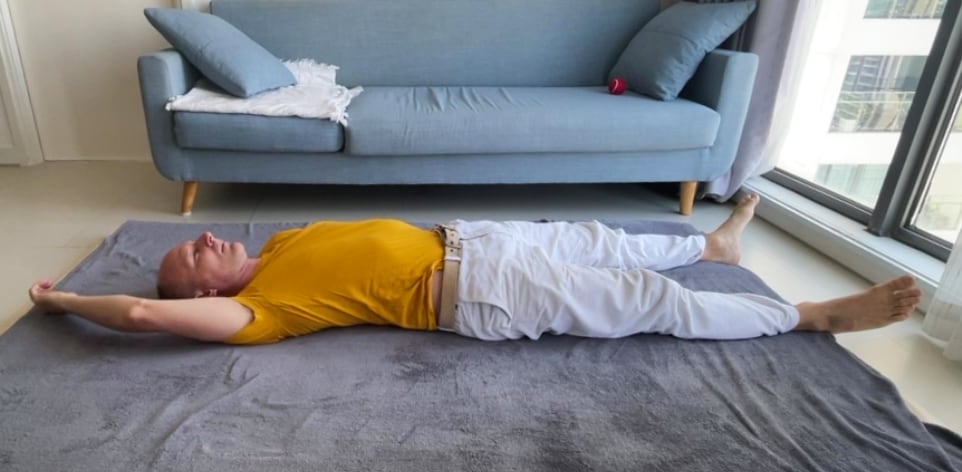
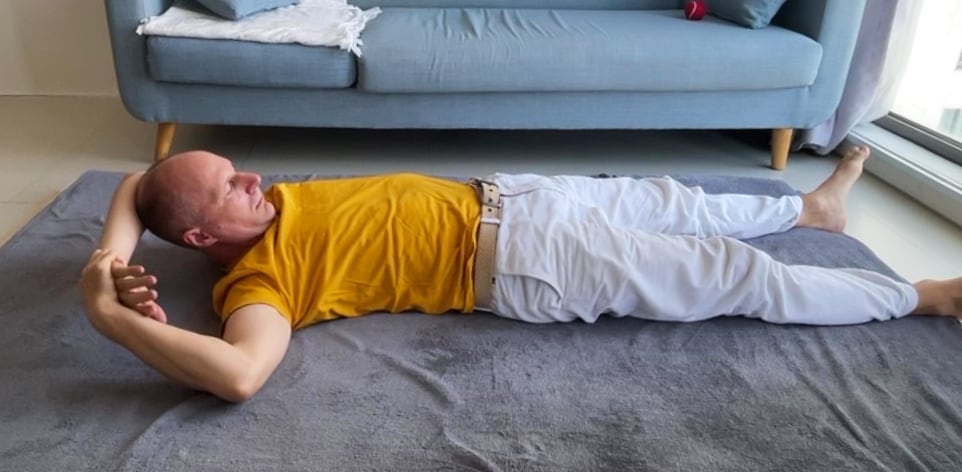
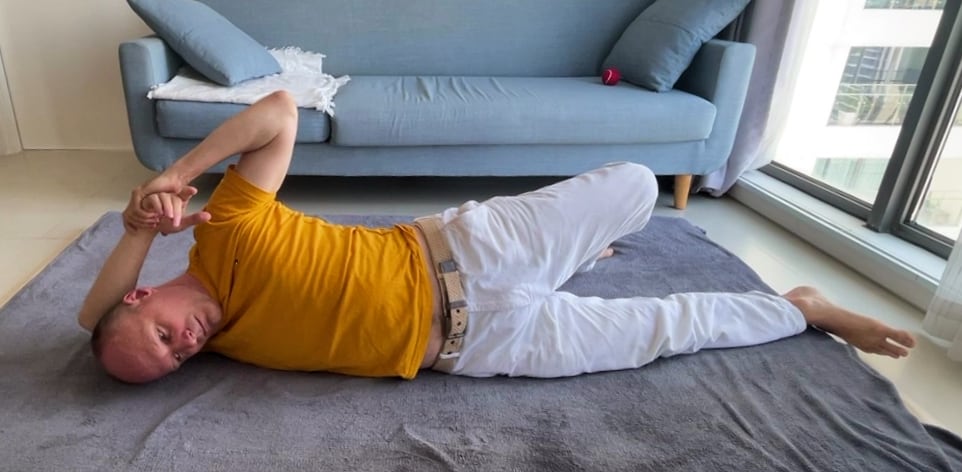
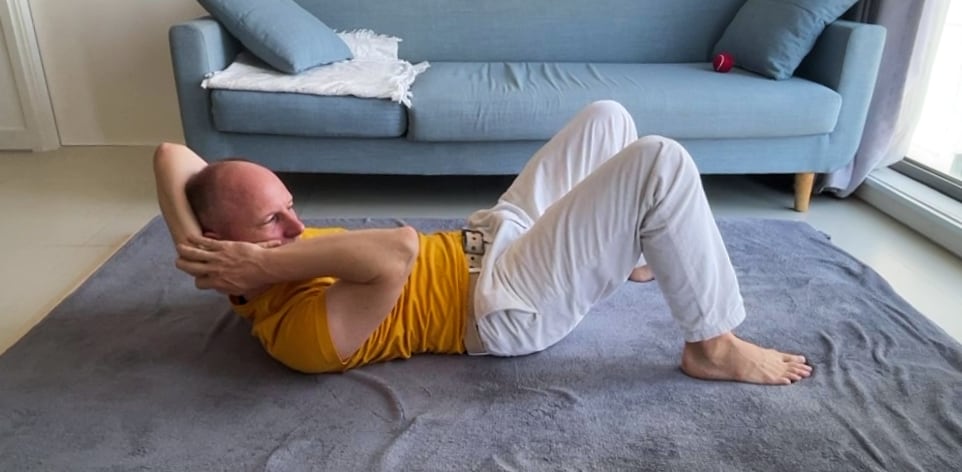
I need to work. I want to upload a second version of my latest video, the one titled “MOVE and THINK: An Essay in Movement”, circles with the lower arms, but with a different introduction. I need to film the introduction. And I need to write—to write an essay for my patrons. Been looking forward to this all month. So- let’s get to the filming first.

Critical thinking – critical moving

I just found the angle I want to take my next video from. I was thinking the research into Consciousness would be an interesting angle, the development and improvement of Consciousness through bringing attention to various parts of self in movement. A fusion of Julian Jaynes‘s and Sigmund Freud‘s theories. But it seems too complicated, too fringe, too controversial, too vague. Discarded the Consciousness angle, found something better.

I think I will write a post on Patreon.com to give my patrons a heads-up. See you there!

Finding emotional security

There’s a sentence I’ve tried to wrap my head around and understand for well over a decade now. It puzzled me until the day before yesterday. This sentence is in Moshé Feldenkrais’s book The Potent Self and goes like this:

“In fact, an unrestrained expression of aggression does have a relieving effect. This is due, to my mind, not to the reduction of the pressure of accumulated aggressiveness, but to the amount of confidence the person has gained through exercising the function in which she is impotent.”

There’s three items inside this quote, and two of them I can safely dispose of, or say they’ve been up for discussion for decades now:

Firstly, the question of the accumulation—or build-up—of libido, as defined by Sigmund Freud, the Austrian neurologist and the founder of psychoanalysis. And more general, can all emotions build-up? Where are they stored? How does the accumulation work? And secondly, the release of built-up »emotional energy«, how does this work? And all that. I guess there’s been written entire libraries on that. However, I don’t find them to be that helpful questions.

It’s the third item that kept grinding my gears: “the amount of confidence the person has gained through exercising the function in which she is impotent.”

Moshé Feldenkrais added “it is a great mistake to think that it is dammed-up aggression that produces the neurotic behavior. If that were true, then letting off steam, shadow boxing, screaming, shouting, and beating up an imaginary object [..] should completely release the dammed-up aggressiveness and produce a new person.”

For the longest time I did not understand this part. Until the day before yesterday, when I saw a young man on Youtube talking in rage about the people who refuse to take the Covid vaccines. He was talking to the camera of a News outlet (Good morning Britain), and the longer he was talking the more in rage he came. He was letting off steam by insulting and shouting at imaginary people who refuse the vaccines, by trying to get sympathy from imaginary fellow people who took the vaccines, and by trying to explain the situation to an imaginary person of authority. Quite the show actually.

However, did his public display of aggression help him find inner security? Did it solve his original problem—that he feels unsafe, at great danger and that he’s impotent in the function to make himself feel safe? Did he become able in this function he’s impotent in? Probably not.

On the other hand, did his speech further his confidence in speaking in public and exercise open aggression? It certainly did. The longer he spoke the more confident he seemed to be, and to have the right of it.

To conclude, I think this sentence in Moshé Feldenkrais’s book is not a general remark, but a specific one that applies to specific situations. What do you need to make yourself feel safe, in a situation where you cannot rely on your environment to make you feel safe?

Attention, awareness and consciousness

Friday night I attended a networking meeting for what they call Content Creators, a meet-and-greet here in Saigon, Vietnam. I was in conversation with a random person, when suddenly a tall, young man entered our circle. “Hi, my name is Max. I have a question for you guys: What is happiness?” Max was dressed casually, with a T-Shirt and jeans, he looked muscular, with full, blonde hair, and was wearing a mini air-conditioner around his neck. “Aha,” I thought “a pick-up artist. Good for him. Haven’t met one of his kind for what seems like well over a decade. But… what does he want of me?”

Max smiled confidently, told us proudly that he was an English teacher, and was happy to answer what that thing around his neck was. A pretty girl passed by and said “Talk to you later Max, I have your number.” Max’s smile widened even more, and he announced loudly “God, I love Vietnamese girls!” I first turned to look at the girl who was already gone, then to the circle of guys who fell quiet in admiration of the young stud, and lastly to Max, and thought “That seems like progress—because initially I was under the impression that you only love yourself.”

The next day I had lunch with my neighbour, a well settled, comely looking Vietnamese woman in her 40ties, who is into Yoga and Mindfulness. I brought fresh, organic salad from a local farm in Da Lat, Vietnam. Da Lat is known for its beautiful nature, forests, lakes and mountains. When nibbling on the leaves she closed her eyes and her face turned into a blissful expression. I thought “That’s happiness.”

Back home I wondered what the official definition of happiness, the noun, might be. I clicked a bit around the Internet. Wikipedia, Merriam-Webster, Google. My thoughts drifted to the book I’m reading these days, The Origin of Consciousness in the Breakdown of the Bicameral Mind. A 1976 book by the psychologist Julian Jaynes (1920-1997). I stumbled down a flight of words on Wikipedia. Every click a pit without bottom, it seemed like. Or call it an endless sky, if you will. All definitions from Wikipedia:

Consciousness, at its simplest, is sentience and awareness of internal and external existence.

Sentience is the capacity to experience feelings and sensations.

Awareness is the state of being conscious of something. More specifically, it is the ability to directly know and perceive, to feel, or to be cognizant of events.

Cognition refers to “the mental action or process of acquiring knowledge and understanding through thought, experience, and the senses”.

In philosophy of self, self-awareness is the experience of one’s own personality or individuality. It is not to be confused with consciousness in the sense of qualia.

In philosophy of mind, qualia are defined as individual instances of subjective, conscious experience.

“Interesting” I thought. One word leads to the next and they all go in circles. Seems like a whole lot of people have been spending a whole lot of time on these definitions. I poked around some more:

Attention is the behavioral and cognitive process of selectively concentrating on a discrete aspect of information, whether considered subjective or objective, while ignoring other perceivable information. 

Introspection is the examination of one’s own conscious thoughts and feelings. Introspection is closely related to human self-reflection and self-discovery and is contrasted with external observation.

Mindfulness is the practice of purposely bringing one’s attention to the present-moment experience without evaluation.

And then… I left it at this.

Certified children: framed, boxed and shipped

My neighbour booked two sessions with a fitness trainer. Turns out she only took one session, even though she’d already paid for both. “How was it?” I asked. “The fitness trainer said there’s basic ways of movement children need to learn. He said he teaches children the correct way to move. What do you think of that?”

“I downright disagree!” I exclaimed. And added “You’re pretty brave though. I probably would’ve walked out before the first session had finished.”

The rejuvenating human touch

I’ve just seen the famous speaker Jordan B. Peterson in a recent video, I guess, in a speech he gave in Jerusalem. I was thinking, “Oh, he looks more dried-up than ever.” Almost frail, his physical body dearly exhausted. I was thinking, here you have a person with all the money in the world, with access to the supposedly best clinics and best doctors, yet unable to find real help, quite obviously so.

Maybe that’s presumptuous. I don’t even know why I was thinking that, or why I seem to care. Maybe because I’ve read some of his essays, or listened to some of his earlier work, and found that helpful and inspiring. Now as much as I would like to work with him, see if he could get better, I have no way of contacting him. He is, I guess, stuck in his sophisticated network, essentially unable to try anything outside the world of the rich and famous. It’s almost ironic. Even more so when considering that his wife is a former massage therapist. Help might be right there, under his very own roof.

I wonder what that means for myself? For my own health. I surely won’t be able to go on forever, all on my own. I will have to find students to teach, so they can work on me hands-on. I can’t work hands-on to myself, I can’t move and massage myself the way I could be moved and massaged by someone else. We humans are born to be able to touch, to sense, to move, to massage and help others (and help all animals, that is.) It’s plain obvious, just like horses have hooves and are born to run, and birds have wings and are born to fly (and pass plant seeds out along with their droppings all over the land).

I do go to massages, like twice a month, and try a different place or practitioner each time. But no matter where I go, the quality is dearly lamentable, a faded shadow of what could be possible, of what would be needed. I’ve yet to find a massage practitioner I can talk to and teach. Usually there’s a language barrier, or an ideological barrier. After all, I don’t have a state certificate in massage therapy, so what could I possibly know about it? (That was sarcasm.) I wonder how much longer I myself can keep up without receiving the rejuvenating human touch.

I will try a new place and a new practitioner tomorrow. Never ever give up.

New Arms in Circles (a prequel)

omg omg omg … I was just rolling about and had the most amazing moment ever … omg omg omg

So- my next online workshop in China was re-scheduled to happen 3 weeks earlier than planned and will be held this Saturday. And so I was thinking, hm, what to do with my folks in China this time… I advertised the workshop as “Release tension in the neck and upper chest”, silly me. But easy. Of course I will teach ideas from my neck series, “Tight Neck? Here’s Help!”

However, my previous workshop in China, advertised as “Release tension around the hip joint”, I didn’t start with my Hip Joints Series 2, but I started with rolling the legs, bending the legs, and then diving deep into combinations, a quite wonderful experience. So I was thinking, this time I should start with rolling the arms.

And so I played with some ideas this morning, while still in bed, in lying supine. I set up a rule: keep the elbow in place, only the lower arm and hand can go round and round. That was interesting for a while. And then later in front of a mirror I tried the same thing in standing, quite the challenge actually, which quickly evolved into a sequence of silly dancing.

But then, just now, this evening, I got down on the floor, onto my back, and I was like, “Ok- but this time for real, what am I gonna do?” So I did the elbow and hand thing again, but in combination with the rolling of my head. Ok, the “New TMJ Exercises” lesson first. Then the circles with the lower arms. But in which direction should the head roll? In the same direction or opposite direction of the circles with the lower arm? Ok, then in side-lying. In this position the elbow need to move. Arm circles. Yes, this answered the previous question about the rolling of the head. The answer came through movement, the lesson works.

And then on the front-side, on the belly. Huh. Hm, goes to show how much forwards oriented in space arm movements are. A dead end? I took a rest, maybe a 10-minutes nap. Then I turned my head and tried circles with the other arm. Oh yes. There’s a way. And how about…

HOLY MOLY! I was as surprised as a toddler who gotta himself to stand on both feet the first time, just when nobody was watching. Or who come from lying supine to sitting, through a roll. Big surprise! Big revelation! Ok, this will be my next Youtube video. And I almost have the complete workshop lined up, as well:

  • New TMJ Exercises
  • Writing exercise: note down the lesson, share and compare notes
  • New Arms in Circles – the prequel to my “Tight Neck? Here’s Help!” series
  • Some choice bits from my “Tight Neck? Here’s Help!” series
  • Q&A

But I also was thinking: so bad. My “Tight Neck? Here’s Help!” series should be famous, like “Lord of the Rings”–level famous. And then my new prequel, the one I invented just now, would be the much anticipated prequel. Big deal. But it’s not. For most people my “Tight Neck? Here’s Help!” series is like… like when a monkey in a jungle trips over a statue made of solid gold, and diamonds, and sapphires. An annoyance at best, something hardly looked at and quickly forgotten. I imagine that’s what it’s like when my series’s thumbnail shows up in the Youtube feed of most people. They merely click on /Not interested/, if they bother to click at all. Well, I can’t help that.

There is some disappointment in my soul, but then I think of Youtube as a free video hosting platform, and a place where my videos are easily discoverable, and I think of my patrons on Patreon as my true audience, the people who appreciate and support my video creations; and all my students who can’t afford to be patrons, but watch and like and comment and share my videos, and try out the movements.

Holy bananas! What a lesson! I’m super excited! I will teach it tomorrow to my experimental online group from Austria and Germany, in German language. And then again on Saturday in the online workshop in China, and then I guess I’ll be ready to make the video on Sunday or Monday. Looking forward to present it to you!