
In my last video, I voiced a critical view of the fitness industry’s approach to training the inner thighs—the adductors—which it seems hell-bent on training only through prescriptive (to use this legal-medical-bureaucratic term) compound exercises.
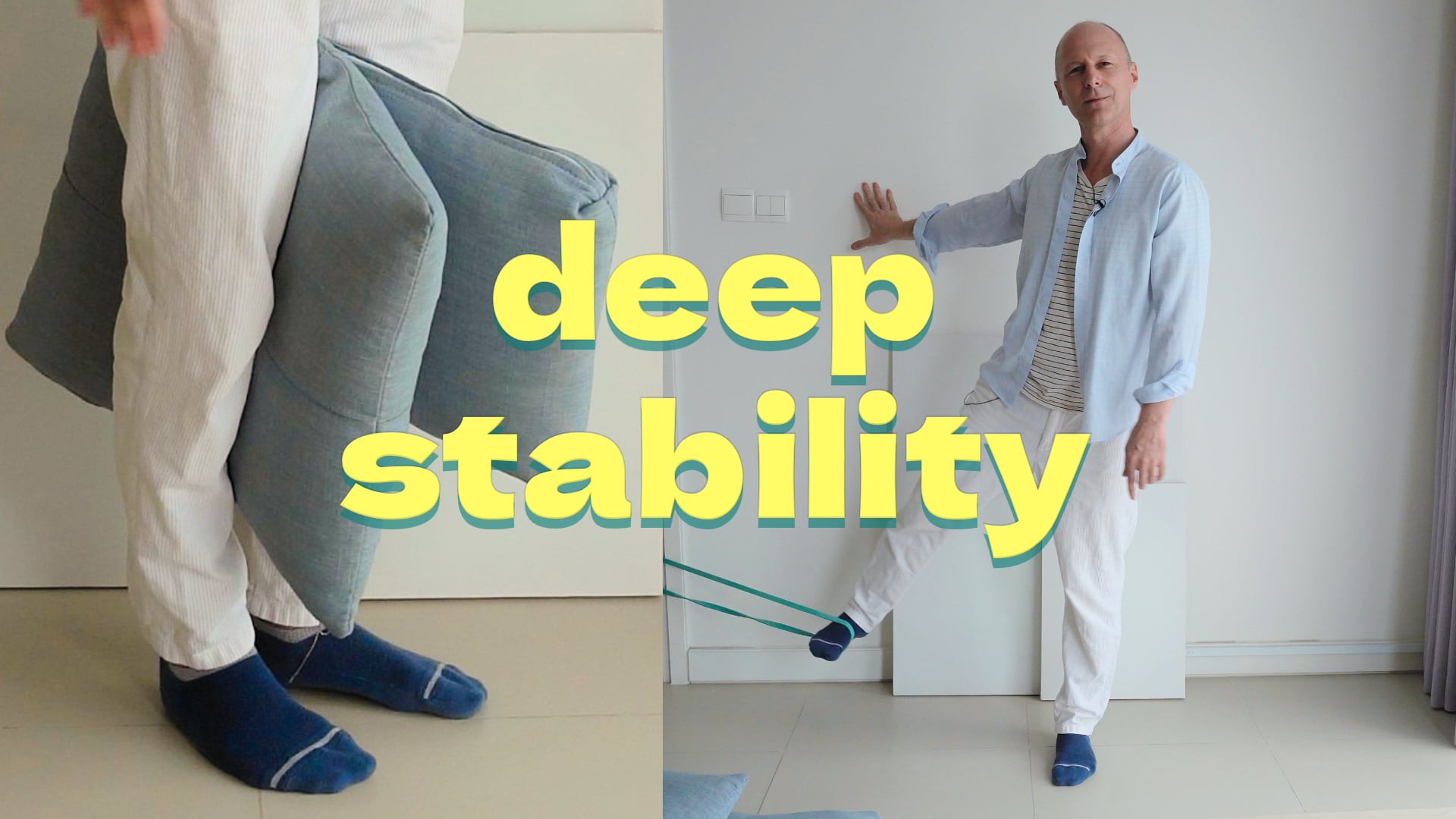
I do understand why so many people follow the famous fitness industry’s master instructors and their recipe-style approach: because (a.) for them it’s a promising, exiting, new focus and (b.) the adductors indeed are so central to the kinetic chain, that training them well can make us stronger, and make everything move and feel better.
So, the stakes are high. However! In my experince,
- learning more about ourselves, becoming more aware of our bodies, our feeling, sensing and thinking, how we move, how everything connects, in a Feldenkrais-inspired, somatic education kind of way,
- in combination with very well chosen, safe, isolated, targeted (to use this military term) adductor exercises
is far superior to faithfully executing overly complicated, indirect compound exercises that somehow “also” train the adductors.
To me, the argument almost sounds like saying, “Eat 🍎🍏 apples to meet your hydration requirements,” because apples have a rich nutritional profile, contain fiber, make for a healthy snack overall, and “also” contain water—instead of simply drinking water directly (does this exaggeration make sense?)
Maybe I should write and talk more about this? 🤔
For this blog post, I have prepared a series of AI-researched bullet points to help highlight the benefits of adductor training:
(prompt) if i strengthen my adductor muscles and also improve how they integrate and how the function and fire in relation to the glutes, pelvic floor, lower back and up the chest, and also down over the knees and down to the feet, if I do that in the best possible way and really strengthen them, making them stronger and more able to work over longer periods of time and also switch on and off faster, all that. i mean feldenkrais and functional fitness informed training, not seated leg presses in the gym ;) what can i expect, best case scenario
In the best-case scenario, with consistent, intelligent training focused on strength, endurance, neuromuscular control (fast on/off switching), and full kinetic chain integration, you can expect transformative improvements in movement quality, resilience, and overall function.
This approach—emphasizing Feldenkrais-style awareness and functional, multi-planar, closed-chain movements—goes far beyond isolated gym work by rewiring coordination and efficiency.
Key Expected Outcomes (Best Case)
Here’s what optimized adductor development, well-integrated with glutes, pelvic floor, core/back, and the lower chain (knees/feet), typically delivers:
- Superior Pelvic Stability and Posture: Strong, responsive adductors (especially adductor magnus, which has a big hip extension role) work synergistically with glutes and pelvic floor to stabilize the pelvis during walking, running, single-leg activities, and dynamic shifts. This reduces excessive anterior pelvic tilt, lumbar shear, or compensatory lower back tension. You’ll feel “locked-in” through the core-pelvis-hip complex, with better upright posture that extends upward (easier chest/shoulder organization) and downward (better foot/knee alignment).
- Reduced Pain and Injury Risk: Dramatically lower chance of groin strains, adductor tendinopathy, hip issues, knee valgus collapse, IT band problems, and lower back pain. Better force absorption and eccentric control (lengthening under load) protects the chain. Many people report resolution or major reduction in chronic tightness/pain as imbalances correct.
- Enhanced Athletic Performance and Movement Efficiency:
• Better lateral movement, cutting, deceleration, and change-of-direction speed (key for sports or everyday agility).
• Stronger hip extension contribution from adductors (especially magnus) boosts power in squats, lunges, running, jumping, and climbing.
• Faster neuromuscular firing means quicker stabilization reactions, smoother gait, and less energy waste. Movements feel more fluid and powerful. - Better Pelvic Floor and Core Synergy: Adductors co-activate with the pelvic floor and deep core (including on exhalation). This improves pressure management, continence, and overall trunk stability. Benefits can include better breathing mechanics, reduced leaking (if relevant), and a stronger “cylinder” from pelvis up through the chest.
- Improved Endurance and Resilience: Higher fatigue resistance lets you sustain good form longer in walks, runs, hikes, or sports. Faster switching (on/off) enhances reactivity and reduces compensatory overuse of quads, hamstrings, or back.
- Better Lower Chain Alignment and Foot Function: Stronger adductors help control knee tracking and hip rotation, which propagates to better ankle/foot stability and arch support. This can reduce foot pain, improve balance, and create a more connected “spring” from ground up.
- Overall Movement Quality and Longevity: Feldenkrais-informed work adds refined body awareness, so you move with less effort, better joint centration, and more options in your movement repertoire. Many experience a sense of “whole-body integration” — easier breathing, reduced global tension, and better recovery. Aging gracefully with fewer mobility restrictions is a realistic outcome.
Timeline and Realism
- Early gains (4–8 weeks): Better awareness, activation, stability, and reduced discomfort.
- Significant transformation (3–6+ months): Noticeable strength, endurance, power, and integration, assuming progressive loading and consistency.
- Long-term mastery (1+ years): Elite-level control, resilience, and effortless function.
Results depend on your starting point (e.g., existing weaknesses, asymmetries), consistency, recovery, and addressing any mobility restrictions first. Functional training (Copenhagen variations, sliders, single-leg work, rotational patterns, etc.) + Feldenkrais lessons for sensing pelvic-adductor-glute timing will accelerate this.
This is one of the highest-ROI areas to train because the adductors are so central to the kinetic chain. If you’d like, I can also recommend some of Alfons’s best-matching YouTube videos and Patreon resources based on your movement quirks, hip situation, and ongoing relationship struggles with gravity.
