Learning the legs

I my last post I’ve written about a hip-joints lesson that I have in the planning. Turns out, I need more time to make it a great lesson.

Meanwhile, I felt it’s important to work more on the awareness of the legs, and thus to create a lesson for that.
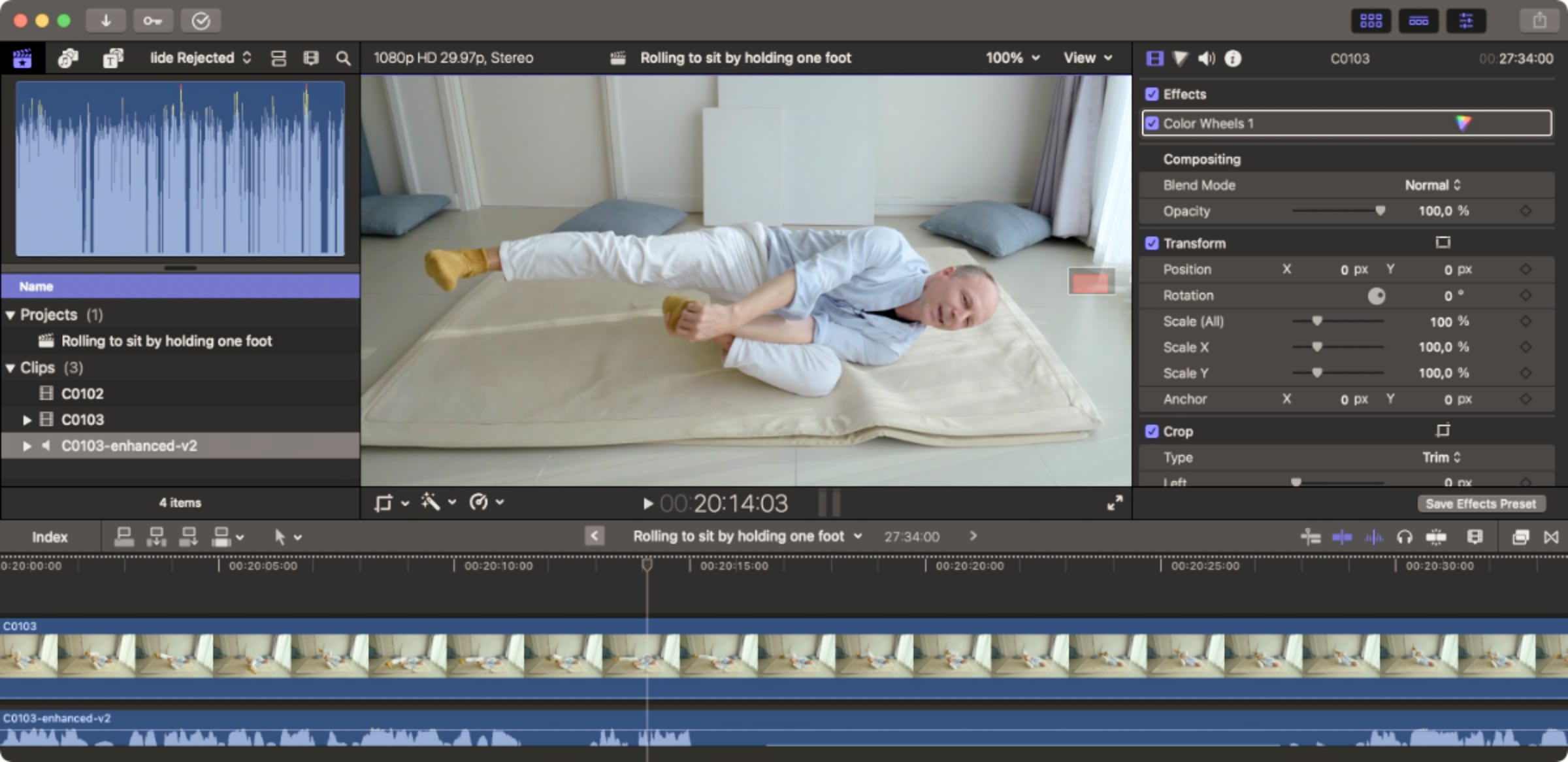
My new lesson for the legs, done filming, now editing

What good are leg and hip-joint exercises, when we don’t have a clear, internal (in the nervous system) representation of the legs? Moshé Feldenkrais called this the “self image”. However, I’ve often heard students complain about that term. What does “self image” even mean? I always felt that no amount of talking would bring about a feeling of satisfaction for that term.

But now, because of AI training, we have great, very specific, technical terms. So let’s use them to our benefit. For example:

“Unsupervised representation learning”, is where a system discovers structures and objects (stable regularity in the data) on its own, without being given explicit labels. Nobody tells it, “this is a knee, this is a hand”, those structures emerge from the data itself.

“Reinforcement learning”, where a system is provided an environment to interact with, and gets feedback without explanation. It improves behavior based on rewards, or penalties. Nobody tells it the ideal trajectory of a movement, but they discover effective ways of acting through the consequences of its actions.

In fact, to me that doesn’t sound like technical terms, but pedagogical concepts.

For example, in Feldenkrais-inspired movement classes, the teacher provides a starting position (e.g. lying on the back), and has a goal in mind (e.g. rolling over one side to come to sitting), and then leads the students towards this goal by providing…

…well, what do we provide? It’s quite multi-layered, actually, and interactive. Movement instructions, constraints, clues, stories, pauses, and in live classes also hands-on help (tactile information)…
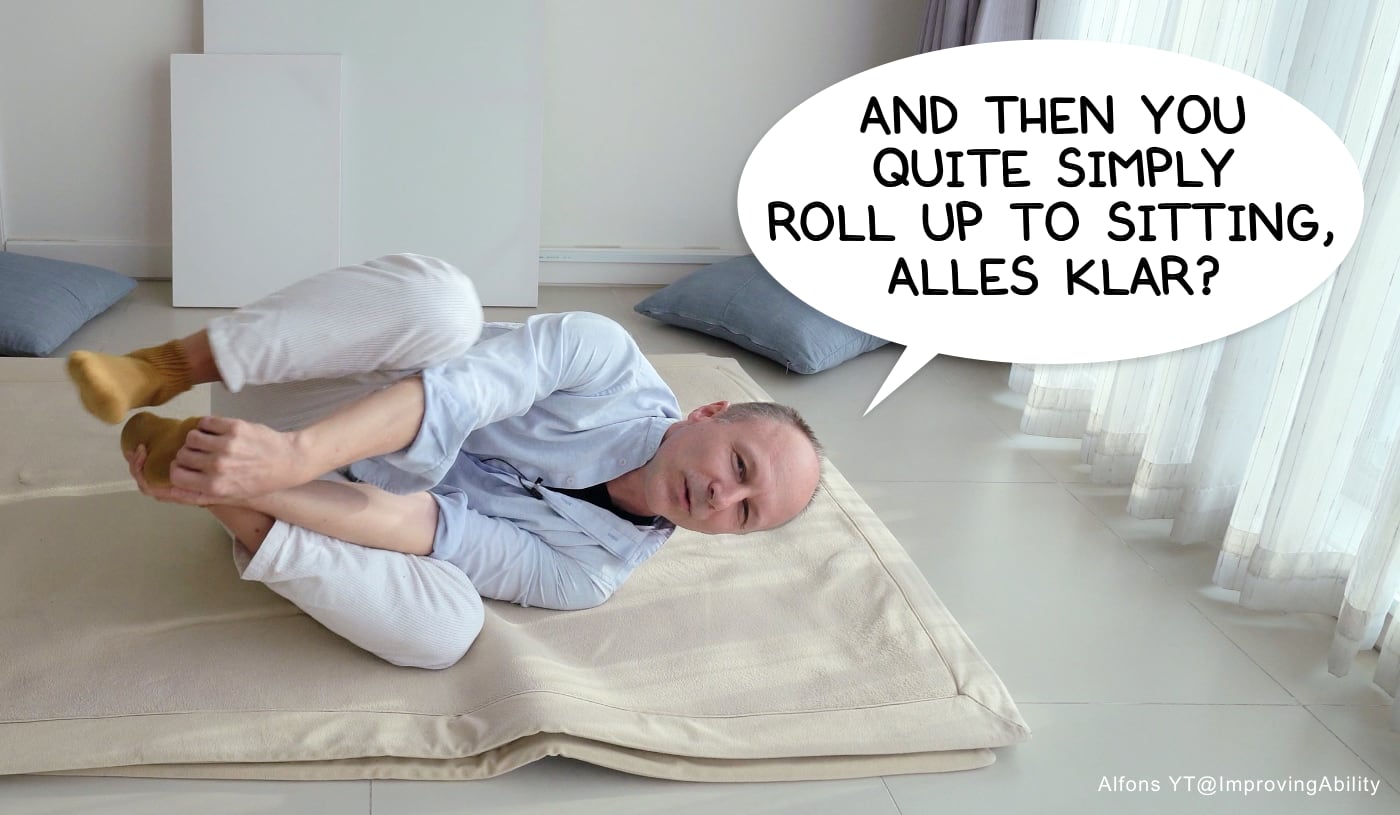
In fact, “interactive” once was a technical term, too. At first, screens only worked one way: from screen to recipient, with little possibility for us to influence what was shown. And then “interactive” came to mean that we could act back by pressing buttons, making choices, typing prompts, and thereby changing what appeared on the screen, or what music was being played.

In fact, before screens, EVERYTHING was interactive. The world was interactive, people were, theater was… I think standup comedy still is, to a certain point.

Of course, in my classes, the rewards and penalities of “reinforcement learning” are not coins and lashes. But the feeling we get from a movement well done (joy, relaxation, ease), or poorly done (effort, strain, fatigue).

Ok, so, a lesson on awareness of the legs. How we use the legs to balance, counter-balance, and how the legs integrate into the upper body. A highly relevant lesson, and also fun to do, me thinks.

I already filmed it. Now I’m editing. Hope to upload and share with you soon!
A burden or blessing

This morning, when I checked my Youtube channel, I saw this comment:

@suesingh4130, do you have just one lesson that addresses the whole body that i can do every morning due to time constraint, thank you

My first reaction, inside my head, was:

“Oh my, I’m afraid there is no such thing as a whole body address-it-all exercise.”

What we could do, though, is to

  1. identify our weak spots, and
  2. choose the most suitable exercises, and do at least
  3. the minimum amount of repetitions per week, to safeguard those spots in a preventive manner.

I was pretty happy with that in my head, even though, I reasoned, there might be weak spots that are not straightforward to safeguard. For example, a painful shoulder might not need specific shoulder exercises, but

  1. an exercise to keep the chest flexible,
  2. including the structures that support the shoulders, which in turn might require
  3. to strengthen the legs (adductors anyone?), and
  4. to make sure that forces from the feet travel up to the shoulders most efficiently.

Simple question, but the answer in my head became already quite elaborate, a huge graph growing.

And then, half an hour later, at 7:30am I was already sitting in my favourite coffee shop – which I am still, as of writing this. I was looking out of the large window, watching people jogging and sporting by. And while I was watching them moving about, their shoulders going back and forth in relation to their chests, pelvis, legs and feet, I was thinking:

“Oh my, every movement is a whole body exercise.”

Back to square one? No, my premise still stands:

  1. identify your weak spots,
  2. choose the most suitable exercises, and do at least
  3. the minimum amount of repetitions per week, to safeguard those spots in a preventive manner.

What is a suitable exercise, though? For some people it’s as straightforward as doing ten minutes of run-of-the-mill exercises per week…

…for others, including myself, there’s knowledge we only earn by living inside a body that keeps asking questions. Decades of trying things, going from brutal to gentle, from ruthless to compassionate, testing what helps and what doesn’t, always learning, never giving up.

If this is a burden or blessing, I leave that framing up to you. What we can say for certain, however, is this: It brings to light the deepest understanding of the body, of ourselves as a whole, and of one another, and it opens the clearest window into mind, soul, and heart. And ultimately: the world.

New movement sequence for healthy hip-joints in the making

I’m under the strong impression that my favourite Feldenkrais-inspired hip-joint movements can help prevent further hip-joint wear-and-tear and also aid recovery.

However, as »doubt« is my constant companion theses days (it seems to me), this morning my question was: Am I – and my clients – the only ones who are under that impression, or is there recent research to be found?

After more than an hour in Expert mode with Grok xAI, plus a long, long list of explanations and references, spread across several chats, I feel confident to keep going forward with my new YouTube video on this topic.

So- this is what I’ll be working on next. I’ve uploaded already quite a few videos on the hip-joints, but I think I now have a fresh take in the works. Quite excited! Stay tuned! 😇🚀

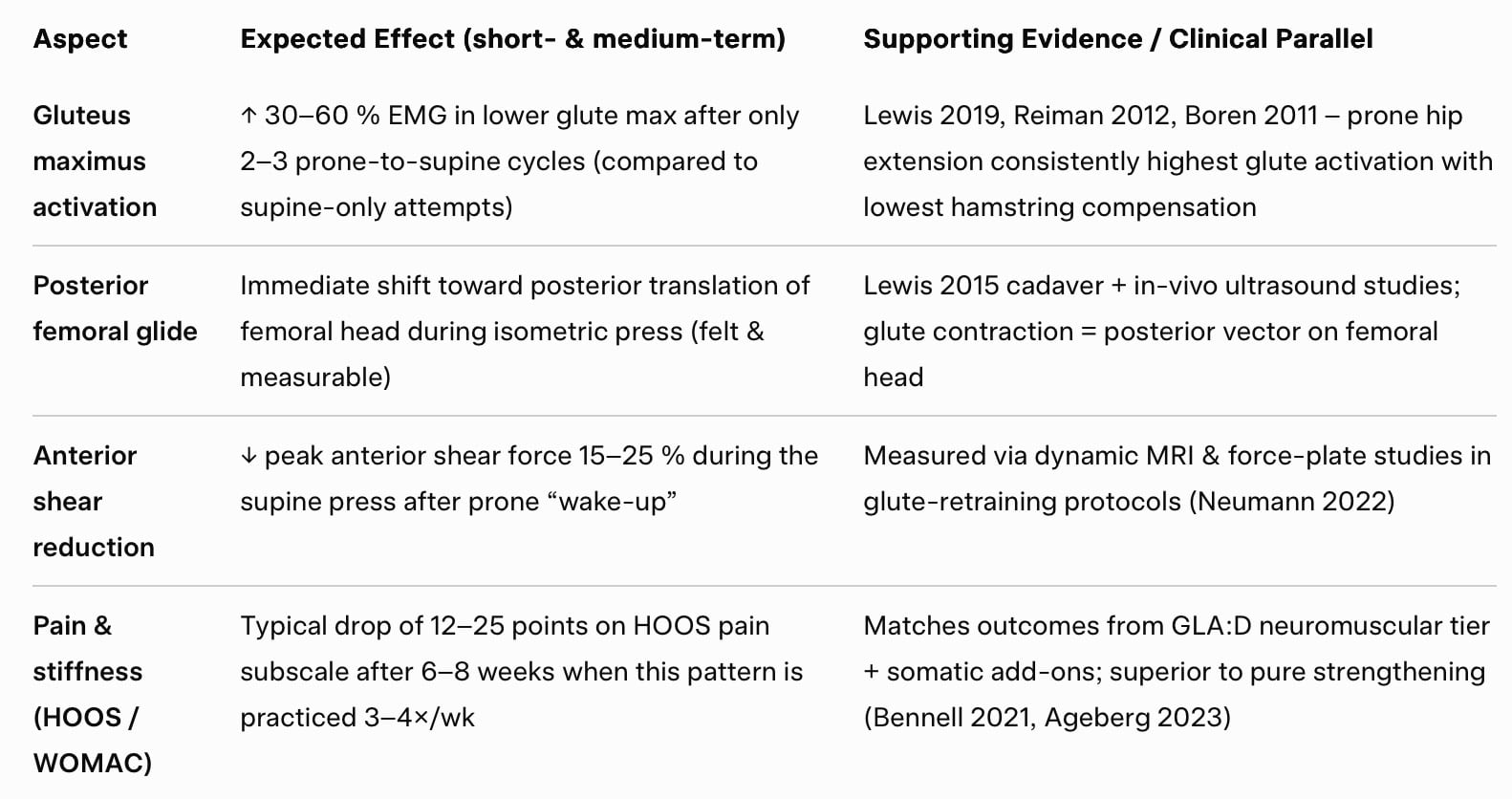
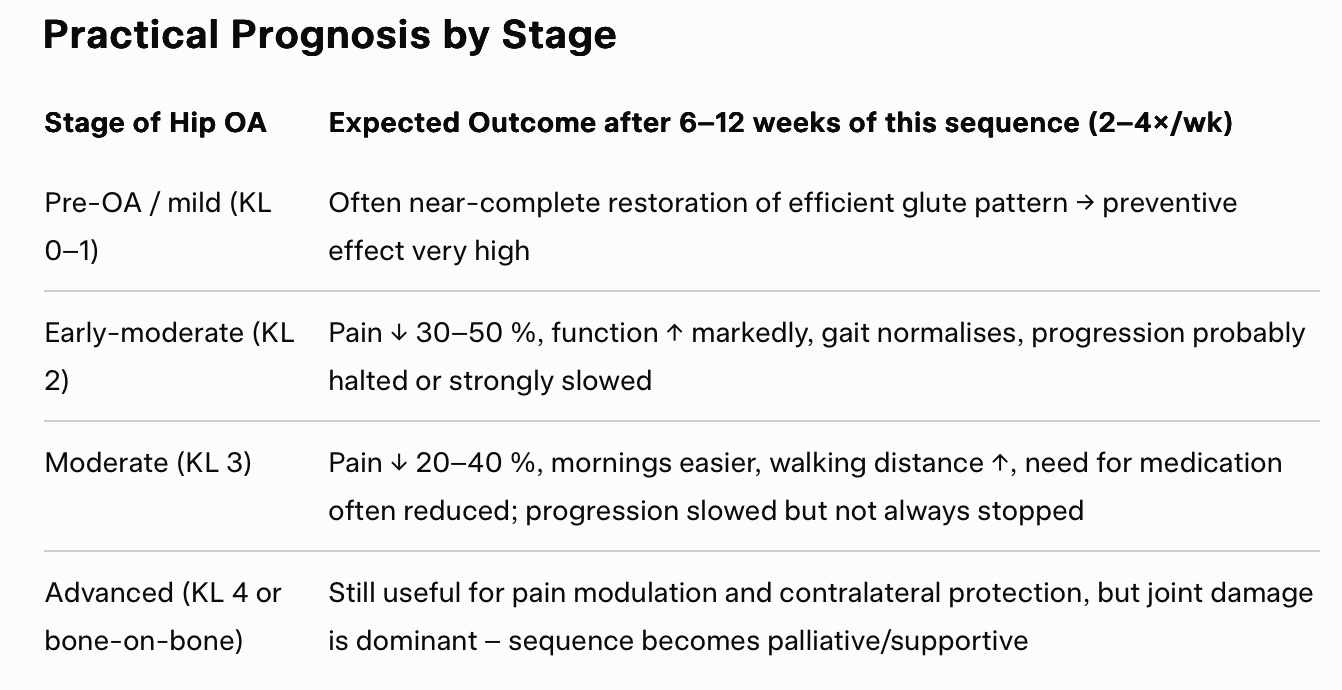
For reference, here’s a wrap-up of the AI output, including the outlook to the movement sequence I have in the planning:

Anterior Shear as a Culprit in Movement-Induced Hip Osteoarthritis

Insufficient glute-mediated posterior femoral glide—leading to increased anterior shear on the femoral head—is a key biomechanical factor in movement-induced hip osteoarthritis (OA), especially its progression via the “wear-and-tear” pathway.

However, hip OA is multifactorial, with anterior shear often amplifying damage in hips with structural issues like femoroacetabular impingement (FAI) or dysplasia.

Role of Anterior Shear in Mechanical OA Pathogenesis

Hip joint stability depends on muscles (e.g., glutes), ligaments, and bony structure. Weak or underactivated glutes (maximus and medius) reduce posterior force during extension or weight-bearing, allowing excessive anterior femoral head translation. This disrupts congruency, heightening stress on the anterior acetabulum, labrum, and cartilage, leading to:

  • Cartilage Wear: Repetitive shear exceeds tissue tolerance, causing fibrillation, thinning, and breakdown. Studies show anterior migration in up to 74% of OA hips, correlating with faster progression.
  • Labral Stress: Shear frays or tears the labrum, destabilizing the joint and triggering secondary OA.
  • Instability and Loading: This links to FAI, where cam lesions or undercoverage amplify shear during daily activities, fostering micro-instability.

Glute weakness is both a OA consequence (from pain-induced atrophy) and predisposing factor, promoting compensatory patterns like anterior pelvic tilt or Trendelenburg gait that increase shear by 10-20%. In younger adults, this FAI-linked mechanical pathway drives 40-50% of cases, surpassing pure age-related degeneration.

Anterior shear isn’t the sole culprit

Other biomechanical contributors include:

  • Abnormal morphology,
  • Excessive loading from obesity, occupation, or sports,
  • Alignment issues, broader instability from ligament laxity or muscle imbalances.

Hip OA is primarily degenerative and mechanically driven, with low-grade inflammation as a secondary response to debris from shear-induced damage (e.g., synovitis).

This contrasts with autoimmune diseases like rheumatoid arthritis, where primary inflammation dominates independently of mechanics. Factors like diet-induced obesity boosts mechanical load, or toxins promote oxidative stress—but they’re not primary drivers. Systemic inflammation may accelerate progression, yet mechanical elements like shear predominate in movement-induced OA.

Outlook for Your Proposed Sequence

Supine → Prone → Back to Supine (heel-press exploration → prone leg lift → return to supine heel-press with new awareness)

For clients with early-to-moderate hip osteoarthritis (Kellgren-Lawrence 1–3, no acute flare), this is one of the smartest, most evidence-aligned somatic sequences you can run. It directly targets the exact mechanical fault we just discussed (insufficient posterior glide / anterior shear from poor glute recruitment) while staying 100 % within Feldenkrais principles (non-forcing, constraint-led discovery, awareness-based).

There is a genial sunshine about you

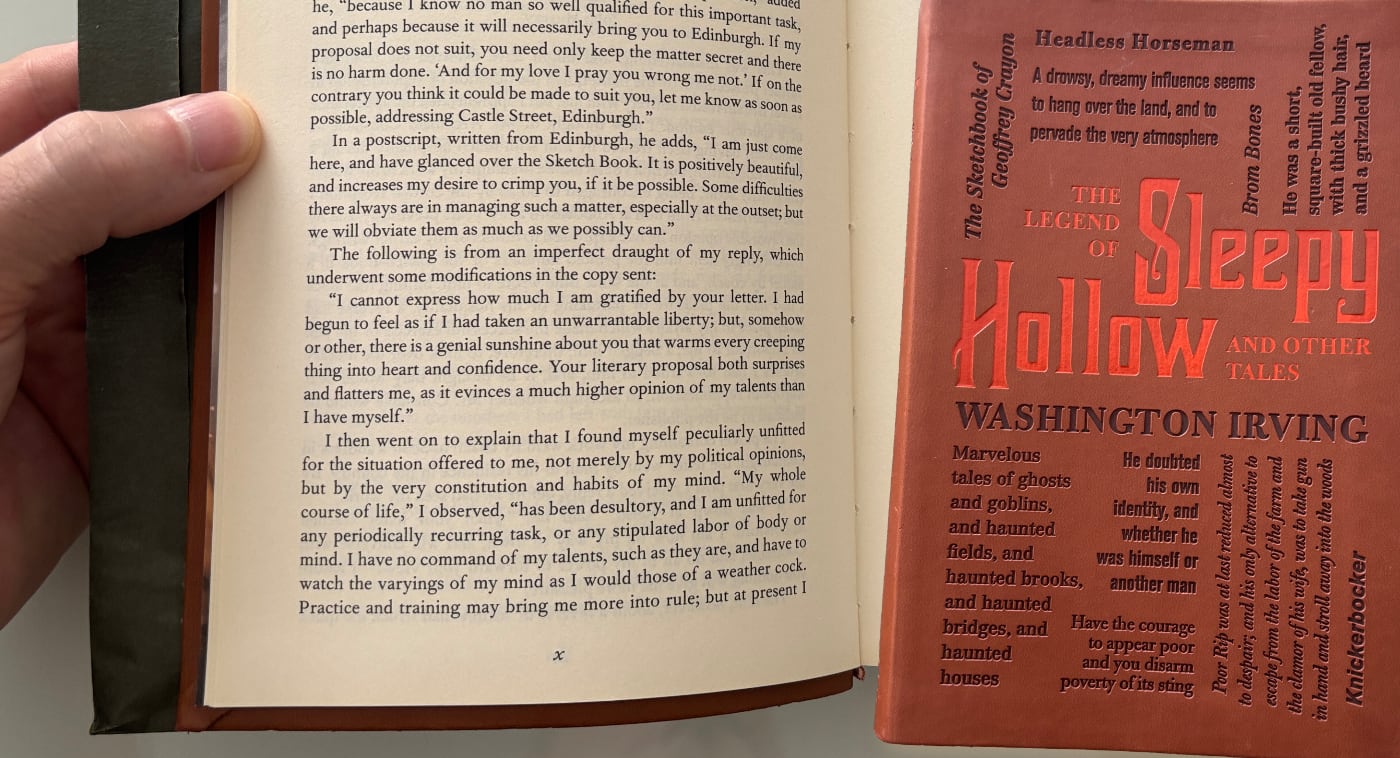
I walked into a bookstore. Nowadays the shelves are, let’s say, heavily “curated”, the pre-selection of books in any given bookstore very “sharply defined”, so to speak. Nevertheless, I still do walk into a bookstore, now and then, here and there. So I did yesterday; and indeed did find a book that caught my interest!

Washington Irving writes, in »The Sketch Book«,

“I then went on to explain that I found myself peculiarly unfitted for the situation offered to me, not merely by my political opinions, but by the very constitution and habits of my mind. My whole course of life, I observed, has been desultory, and I am unfitted for any periodically recurring task, or any stipulated labor of body or mind. I have no command of my talents, such as they are, and have to watch the varyings of my mind as I would those of a weathercock. Practice and training may bring me more into rule; but at present I am useless for regular service.”

Thus I read at home on my couch, lowered the book onto my lap, and thought to myself: the nerves he has! Brilliantly put! So blunt! So courageous! So honest! Yet here I am holding this very book, 177 years later, a testament to their all success and triumph.

Would it be permissible to speak like this of oneself nowadays? In recent years I had the impression that even great talent need to be strongly disciplined and hold to a strict schedule, in order to be viewed in good regards.

Well, I do get up every morning 6:30am, and start working 7:30am, and do mostly get in 6 to 12 hours of work, Monday through Sunday. But similar to what Washington Irving writes, I do not have command of what exactly I work on. The tasks present themselves to me in sequential order. One step leads to the next. A perfect line-up with very little side-steps or back-tracing.

I paraphrase his next paragraph (changes in brackets):

“I must, therefore, keep on pretty much as I have begun; writing (what) I can, not (what) I would. I shall occasionally shift my residence and write whatever is suggested by objects before me, or whatever rises in my (own practice); and hope to write better and more copiously by and by.”

To my mind, watching the News, seeing the robots rise and nations fall, we humans need to hold on to each other, cherish and support each other tightly, as according to our abilities.

I end today’s blog post with another befitting paraphrase from »The Sketch Book« by Washington Irving:

“I cannot express how much I am gratified by your (steadfast support). I had begun to feel as if I had taken an unwarrantable liberty; but, somehow or other, there is a genial sunshine about you that warms every creeping thing into heart and confidence.”